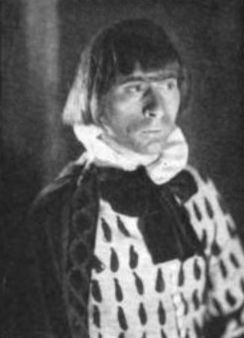
Étienne Decroux
French actor who developed corporeal mime.

Unknown author · Public domain
He developed the style known as corporeal mime, a highly disciplined form of movement that emphasized the expressive potential of the actor's body. His work influenced generations of performers and helped redefine the role of physical theatre in the 20th century.
- field
- Mime, theatre
- nationality
- French
- known_for
- Corporeal mime
Lore & Background
There he began to envision a newly defined vision of mime and later developed an original, personal style of movement. His early 'statuary mime' recalled Rodin's sculptures; later, more plastic forms were called 'mime corporeal' or corporeal mime. An intellectual and theoretician, his body training was based in part on what modern dancers call 'isolations' and on the physics of compensation required to keep the body in balance when the center of gravity is shifted. Jean-Louis Barrault came to the school, and the two worked closely for two years, producing corporeal mime pieces individually and together. Students were eventually required to commit to a full-time regime when rehearsing for performance as L'École de Mime or Compagnie de Mime Étienne Decroux.
Reader's Guide
Decroux's significance lies in his systematic rethinking of mime as a rigorous, autonomous art form. By developing corporeal mime, he shifted the focus from narrative pantomime to the expressive capacity of the body itself, using isolations and counterbalance to create a new theatrical language. His writings, particularly 'Paroles sur le Mime' (Words on Mime), proposed radical reforms for the theatre, including a temporary ban on speech and stage elevations to force actors to rely on physical expression. Though his own mime company never fully materialized, his ideas spread through his many students, including Marcel Marceau, Jessica Lange, and Ingemar Lindh. Decroux's legacy endures in the training of actors and the continued practice of corporeal mime worldwide, as well as in his film appearances, most notably in 'Les Enfants du Paradis' (Children of Paradise).
Did You Know?
- His early 'statuary mime' recalled Rodin's sculptures.
- Among his better known students were Marcel Marceau and Ingemar Lindh.
Gallery
Frequently Asked Questions
What is corporeal mime and how did Decroux shape it?
Corporeal mime is a rigorous movement practice that treats the body itself as the primary storytelling instrument, stripping away dialogue and props. Decroux codified its techniques and training methods, turning what had been a loose theatrical trick into a disciplined art form with its own vocabulary.
Why is Étienne Decroux considered important in the history of physical theatre?
His systematic approach to bodily expression gave a generation of actors, choreographers, and directors a concrete framework for working without words. By elevating mime from a novelty act to a serious performing discipline, he reshaped how 20th-century theatre understood the relationship between movement and meaning.
What field or discipline is Étienne Decroux associated with?
His work sits at the intersection of mime and theatrical performance, though it draws on principles that later influenced dance and contemporary physical theatre. He is most commonly credited as a pioneer of corporeal mime rather than a conventional dancer or choreographer.
More in Dancers And Choreographers 25-29
Elsewhere in the Dancers And Choreographers universe
Spotted an error? Know more?
This is a living reference — every entry is fact-audited, and reader corrections feed straight into our audit queue. Suggest an edit · See this site's audit record