Loie Fuller
American dancer who pioneered modern dance and theatrical lighting.

Kuroczynski · CC BY-SA 4.0
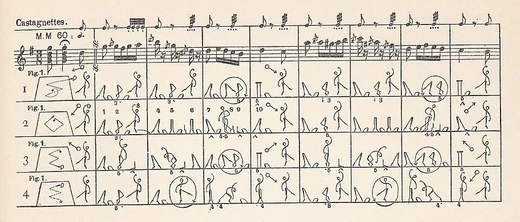
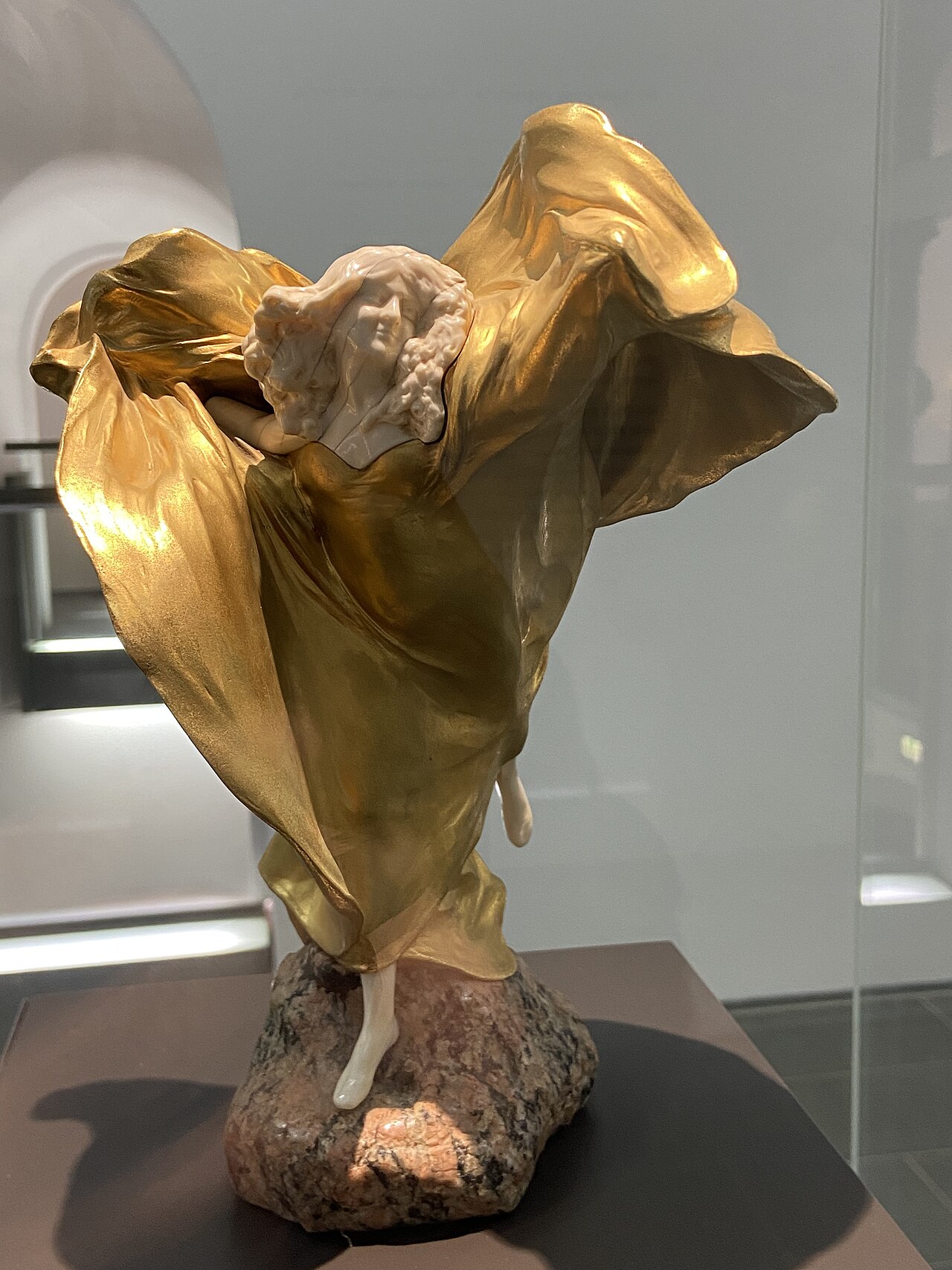
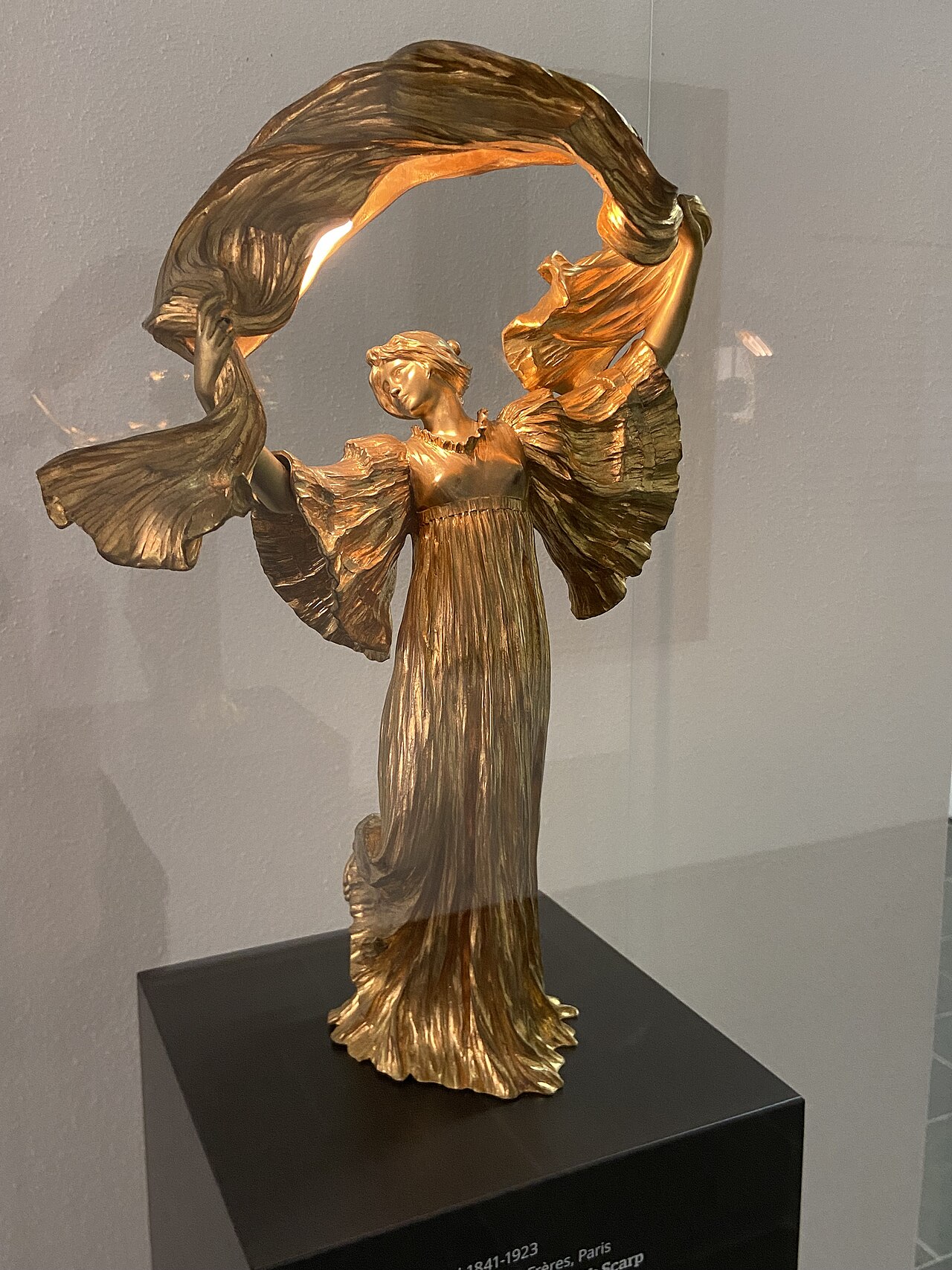
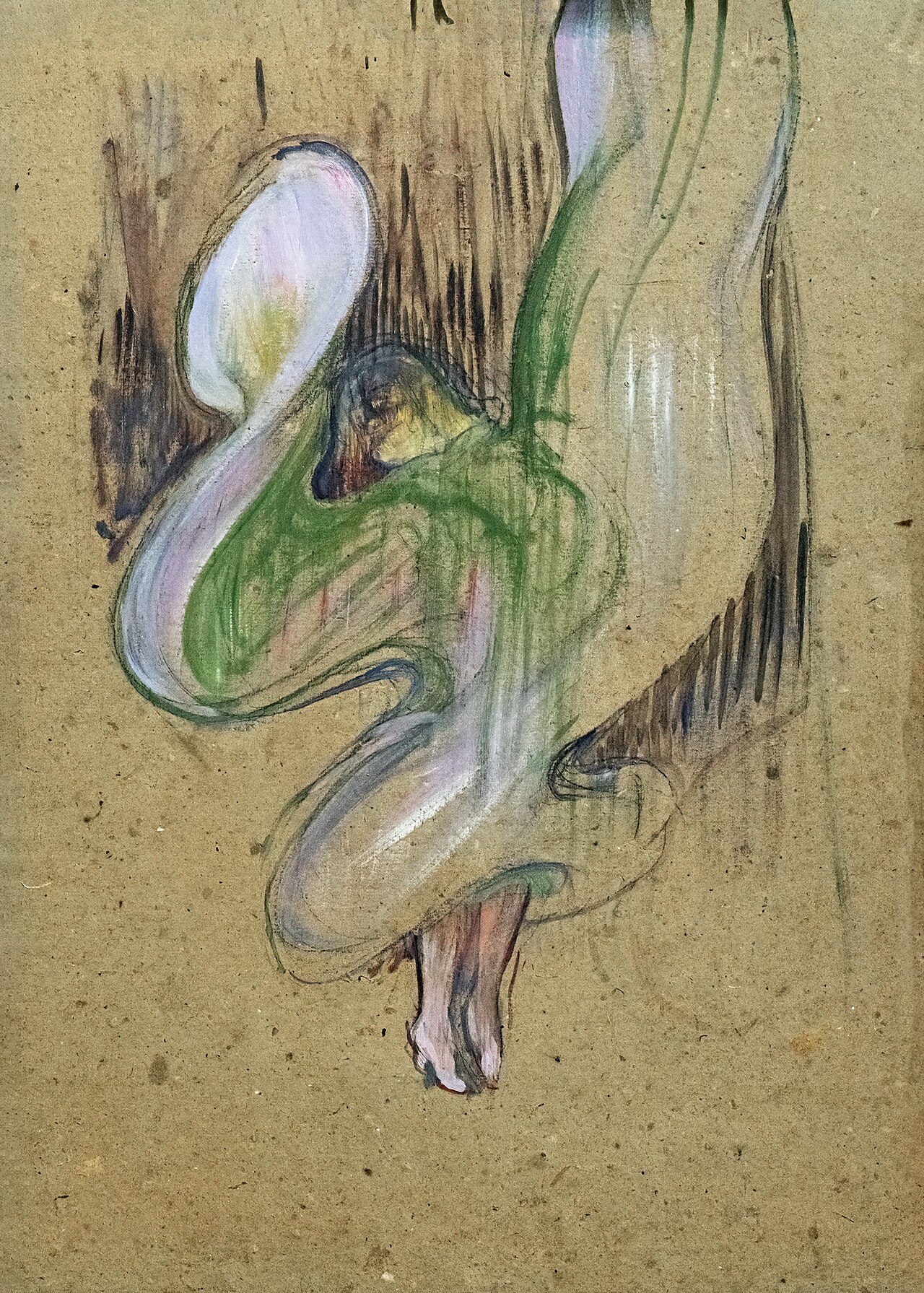
Loie Fuller, born Marie Louise Fuller, was an American dancer and a pioneer of modern dance and theatrical lighting techniques. She is best known for her Serpentine Dance, which combined long silk costumes with innovative colored lighting of her own design. Her work influenced the Art Nouveau movement and inspired other modern dancers to seek recognition in Europe.
- field
- Dance, theatrical lighting
- nationality
- American
- known_for
- Serpentine Dance, pioneering use of colored gels and lighting in performance
Verified Timeline
Lore & Background
Her parents, Reuben Fuller and Delilah Eaton, moved to Chicago when she was two and opened a boarding house. Her father was a fiddler and dance caller, and her mother had aspired to be an opera singer. Fuller debuted on stage as a toddler, reciting 'Mary Had a Little Lamb' at a Sunday school event, and made her formal dramatic debut at age four at the Chicago Academy of Music. She later toured with the Felix A. Vincent Company and performed in Buffalo Bill's touring act. After a failed production in London, she secured a role as an understudy at the Gaiety Theatre, where she was exposed to skirt dances that influenced her later work.
Reader's Guide
Loie Fuller's significance lies in her pioneering integration of dance and theatrical lighting. She created colored gels attached to revolving lamps, allowing her to change colors during performances, and her Serpentine Dance became a landmark in dance copyright law. Fuller defied expectations by wearing long fabrics that covered her body, opening a new path for female dancers. She became a regular performer at the Folies Bergère and was identified with the Art Nouveau movement. Auguste Rodin said of her, 'Loie Fuller has paved the way for the art of the future.' Her work inspired early filmmakers, including the Lumière brothers, though it is unclear whether recordings depict Fuller herself. She also collaborated with Gab Sorère on three films, only one of which survives.
Did You Know?
- Fuller adopted the stage name 'Loie Fuller' in her early twenties.
- The court ruled her Serpentine Dance was not a 'dramatic composition' because it told no story.
- Auguste Rodin said of her, 'Loie Fuller has paved the way for the art of the future.'
Roots in Music and Movement
Marie Louise Fuller entered the world on January 15, 1862, on a quiet farm in Fullersburg, Illinois, a place connected to Chicago by a freshly laid plank road. Her artistic sensibility was seeded at home: her father Reuben was a gifted fiddler who called dances, and her mother Delilah had once dreamed of an operatic career before settling into domestic life. The family's Sunday mornings at the Progressive Lyceum, a gathering place for Freethought, gave young Marie an early taste of public performance and intellectual curiosity. By the age of two, the family had relocated to Chicago, where her parents ran a boarding house and her stage career began almost immediately. Her memoir credits a Sunday school recitation of 'Mary Had a Little Lamb' as her very first appearance, and by four she was already playing a young boy in Was He Right? at the Chicago Academy of Music. Between 1878 and 1879, a tour with the Felix A. Vincent Company in the pantomime Aladdin introduced her to elaborate scene transformations and the mechanics of spectacle, lessons that would echo through her entire career.
Inventing the Serpentine Dance
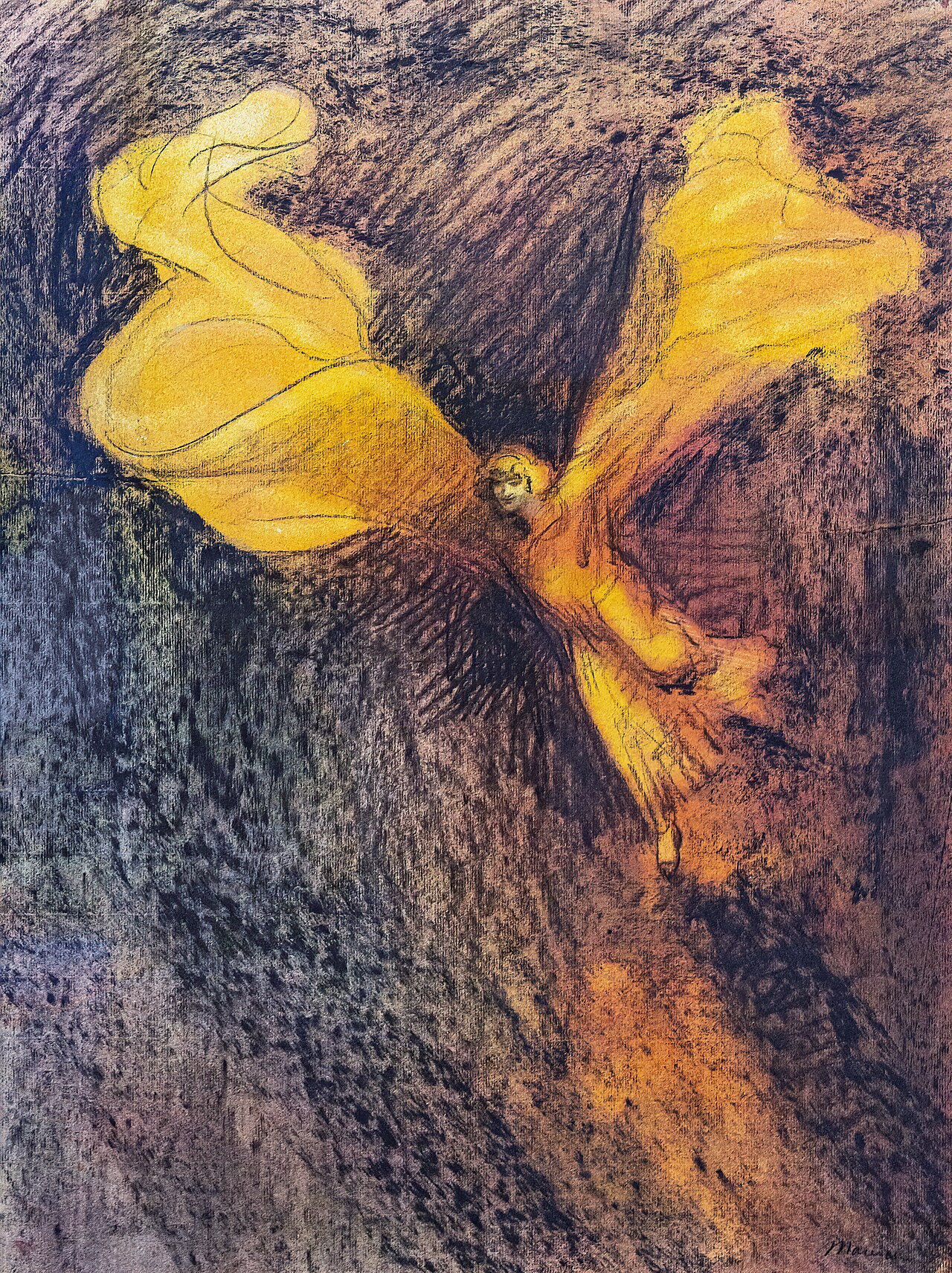
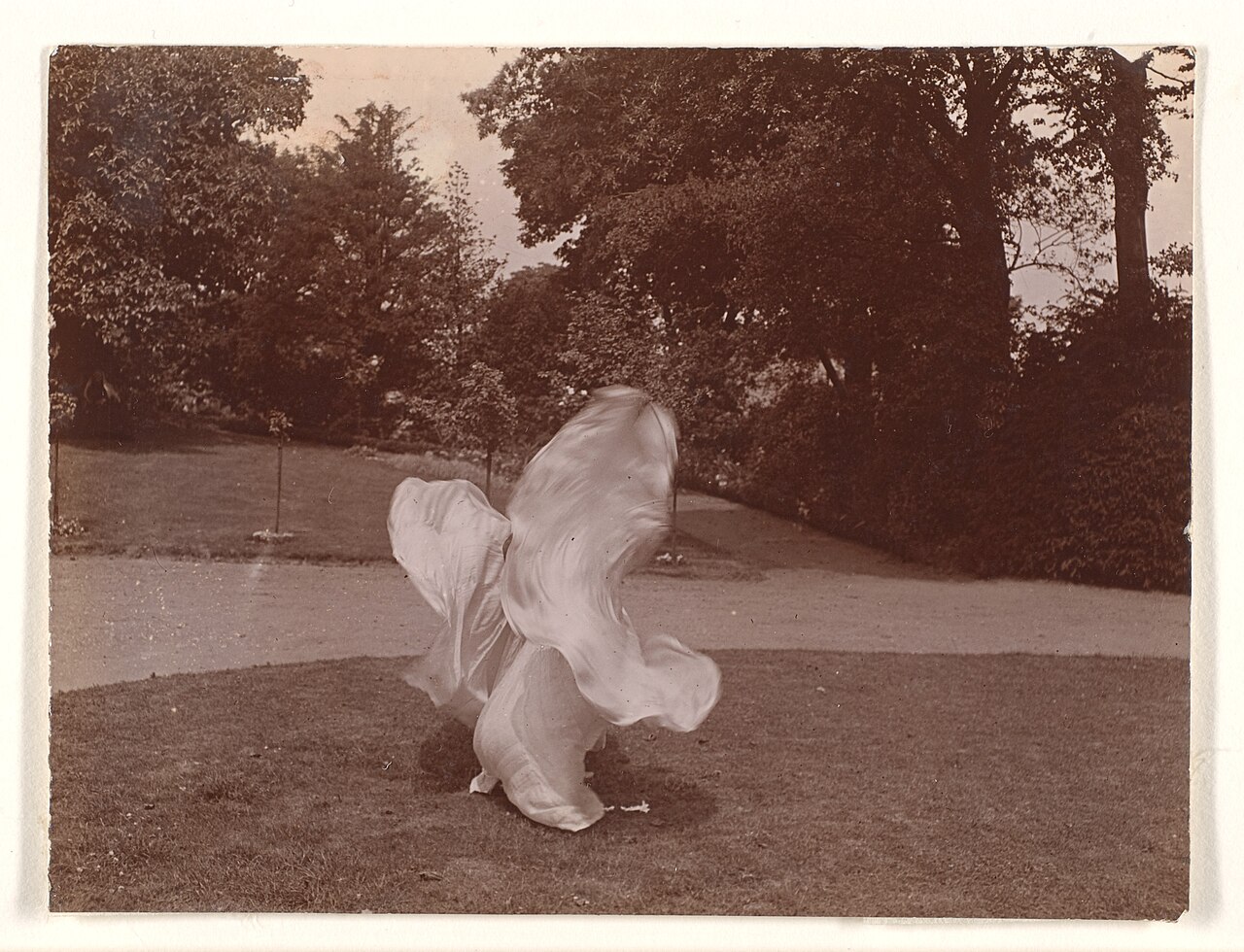
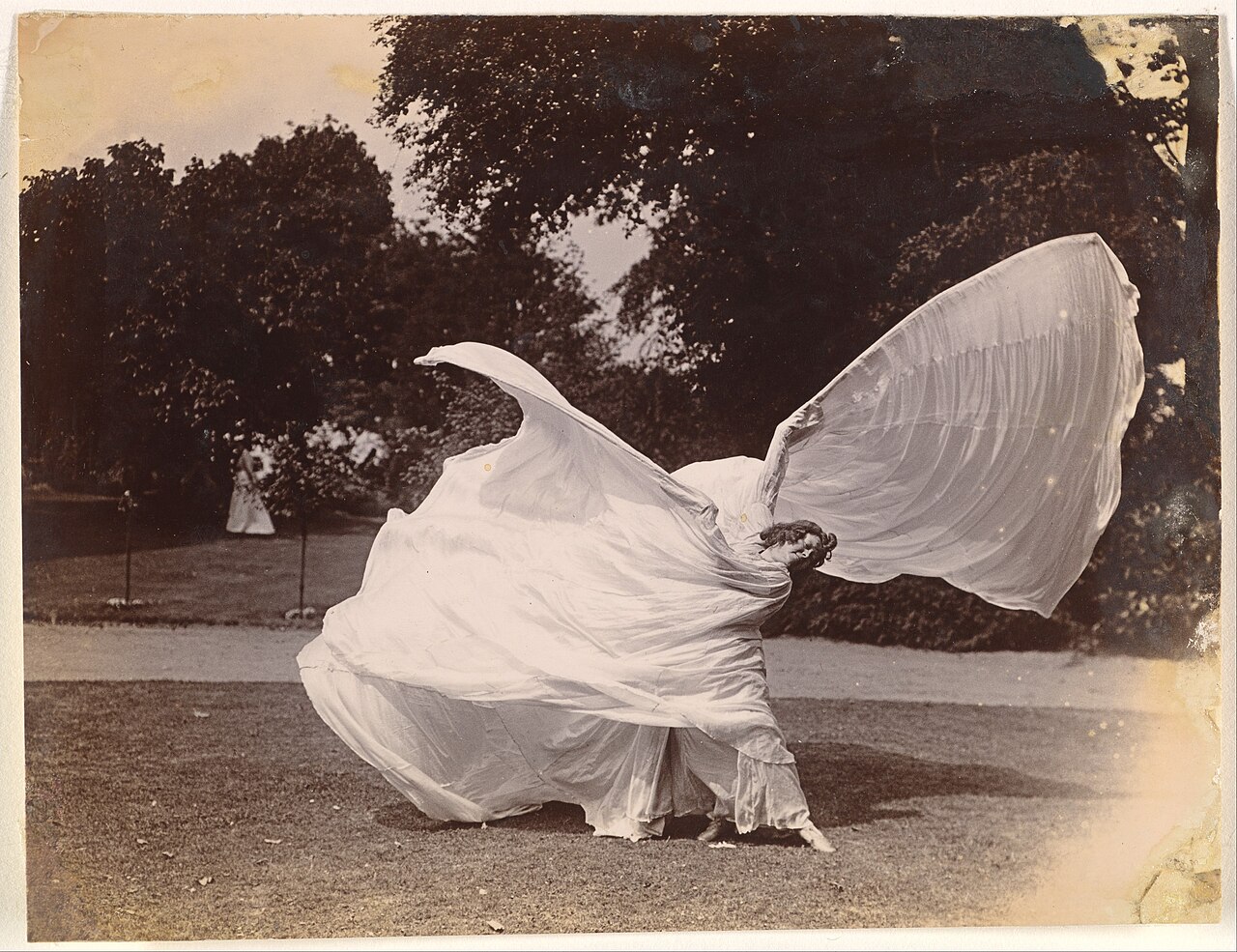
The transformation that defined Fuller's artistry crystallized around 1891, when she began weaving together long silk costumes, choreographed fabric movement, and a lighting system she designed herself. The spark came partly from the 1889 Paris Exposition Universelle, where the Palais d'électricité and the glowing fountains along the Champs de Mars showed her what light could do on a large scale. She also drew on the skirt dances she had witnessed as an understudy at London's Gaiety Theatre, a role she landed after a failed production of Caprice left her broke in the city. Her method was inventive: she dyed gels to shift the color of light at will, mounting them on revolving lamps so the hues could change mid-performance. Rudolph Aronson of New York's Casino Theatre gave her a slot between the acts of the comedy Uncle Celestine, and audiences responded with rapturous reviews. A falling-out with Aronson led her to the Madison Square Theatre, where her reputation as a dancer rather than a mere actress finally took hold.
The Battle for Ownership
Fuller's most consequential fight was not on stage but in a courtroom. In 1892 she sued Minnie Renwood Bemis, an imitator who had copied the Serpentine Dance, hoping to establish that her choreography deserved legal protection. She had even filed a written description with the U.S. Copyright Office beforehand. The Circuit Court, however, denied her injunction, reasoning that the dance told no story, portrayed no character, and depicted no emotion, and therefore did not qualify as a 'dramatic composition' under existing copyright law. The ruling meant that, for decades, purely choreographic works without a narrative arc remained outside copyright protection, a gap that persisted until the Copyright Act of 1976 explicitly covered nondramatic dance. Fuller was not the only one to copy her; Lord Yarmouth, later the 7th Marquess of Hertford, performed the Serpentine under the stage name Mademoiselle Roze. Her legal struggle was, in a broader sense, a fight to keep her body and art from being reduced to an open commodity in a male-dominated theatrical marketplace.
A Pioneer Recognized Abroad
Frustrated by the limited artistic respect she could command in America, Fuller sailed for Europe in June 1892, becoming one of the earliest American modern dancers to seek a continental audience. Paris received her warmly, and she chose to stay, embedding herself in a city that was already a crucible for new art. There she was regarded as one of the leading revolutionaries reshaping performance, and her work in theatrical lighting and free movement helped open doors for generations of dancers who followed. The sculptor Auguste Rodin captured the magnitude of her influence in a single line: 'Loie Fuller has paved the way for the art of the future.' She had adopted the more striking stage name 'Loïe' at just sixteen, shedding the plainness of Marie Louise for something that matched the spectacle she created. Her life spanned from January 15, 1862, to January 1, 1928, a career that bridged the worlds of Victorian stagecraft and the modernist experiments that would define the twentieth century.
Gallery
Frequently Asked Questions
What is the Serpentine Dance?
The Serpentine Dance is Fuller's most famous performance, in which she moved long, flowing silk costumes in fluid, sinuous motions. The effect was dramatically enhanced by colored lighting gels that she herself designed, making the light an active part of the choreography.
What made Loie Fuller's approach to lighting revolutionary?
Rather than treating stage lights as simple illumination, Fuller treated colored gels and lighting as a core expressive element of her choreography. This made her a trailblazer in using theatrical lighting as an artistic medium in its own right.
How did Loie Fuller influence art beyond dance?
Her visually striking performances helped shape the Art Nouveau aesthetic, and her success in Europe inspired a generation of modern dancers to seek international recognition. She is often cited as a bridge between 19th-century theatrical tradition and 20th-century avant-garde performance.
More in Dancers And Choreographers 1-24
Elsewhere in the Dancers And Choreographers universe
Spotted an error? Know more?
This is a living reference — every entry is fact-audited, and reader corrections feed straight into our audit queue. Suggest an edit · See this site's audit record