Marge Champion
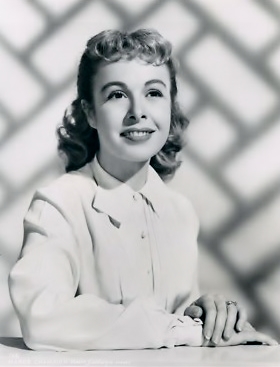
Dancer, actress, and Disney animation model for Snow White.

Agence Rol, photographe · CC0
At fourteen, she was hired as a dance model for Walt Disney Studios animated films, providing movement reference for characters such as Snow White, the Blue Fairy, and Hyacinth Hippo. She also did creative choreography for liturgy and served as a dialogue and movement coach for the 1978 TV miniseries, The Awakening Land.
- died
- October 21, 2020, Los Angeles
- field
- Dancer, actress, choreographer
- nationality
- American
- known_for
- Dance model for Disney animated films; dance partner with husband Gower Champion; Broadway and film musicals
Verified Timeline
Lore & Background
Champion began dancing at an early age under her father, Ernest Belcher, a dance director who taught many Hollywood stars. She made her debut at the Hollywood Bowl at age 11 and became a ballet instructor at her father's studio by age 12. In the 1970s, Champion was part of a team at Bel Aire Presbyterian Church that created creative worship services featuring dance and music, and co-authored two books on the subject. She also worked as a dialogue and movement coach for the TV miniseries The Awakening Land (1978).
Reader's Guide
Marge Champion's significance lies in her dual career as a foundational figure in Disney animation and as a celebrated dancer and choreographer. As a teenage dance model for Snow White, she helped bring realism to one of cinema's most iconic animated characters, a role that was not credited at the time but later revealed in Life magazine. Her work extended to other Disney classics, including Pinocchio and Fantasia, where she also contributed choreography. Beyond animation, she and her husband Gower Champion were a prominent dance team in MGM musicals, and she later moved into liturgical dance, co-authoring books and leading workshops. She remained active into her 90s, dancing twice a week with Donald Saddler and participating in a documentary about their sessions.
Did You Know?
- At age 14, Champion was hired as a dance model for Snow White and the Seven Dwarfs, but was not credited because Walt Disney worried people would assume animators simply copied her movements.
- She modeled for the Blue Fairy in Pinocchio and Hyacinth Hippo in Fantasia, but did not choreograph the Dance of the Hours segment.
- Champion co-authored two books on liturgical dance, Catch the New Wind and God Is a Verb, with Marilee Zdenek.
Roots in a Dance Dynasty and the Disney Years
Born in Los Angeles in 1919, Marjorie Celeste Belcher grew up in the orbit of her father Ernest, a dance director whose students included Shirley Temple, Betty Grable, Cyd Charisse, Gwen Verdon, and Joan Crawford. From age five she trained solely under his instruction, absorbing his emphasis on careful progression, correct alignment, and precise body placement. She later credited those disciplined principles with preserving her health across a career spanning more than eight decades. By eleven she had debuted at the Hollywood Bowl in a ballet called Carnival in Venice; by twelve she was teaching at her father's studio. In 1934, at fourteen, Walt Disney brought her in as a dance model for Snow White and the Seven Dwarfs. Her movements were traced to lend the animated princess a sense of life. For one number she donned a baggy overcoat so two animators could reference her simultaneously for Dopey and Sneezy. Walt withheld a screen credit, worried viewers would assume the animators had simply copied her, though a 1938 Life magazine feature eventually made her role public. She subsequently modeled the Blue Fairy in Pinocchio and Hyacinth Hippo in Fantasia's Dance of the Hours, a segment she also helped choreograph.
The Champion Couple: Silver Screen and Television
After her marriage to Gower Champion—himself a product of her father's studio—the couple became one of Hollywood's most celebrated dance teams. Through the 1940s and 1950s they headlined MGM musicals including Till the Clouds Roll By (1946), Show Boat (1951), and Everything I Have Is Yours (1952), as well as Mr. Music (1950) alongside Bing Crosby, Give a Girl a Break (1953), Jupiter's Darling (1955), and Three for the Show (1955). MGM had hoped the pair would remake classic Fred Astaire and Ginger Rogers pictures, but only Lovely to Look At (1952), a reworking of Roberta, was completed; the couple declined the remaining titles, whose rights still belonged to RKO. Their stage credits spanned Broadway productions from What's Up (1943) through 3 for Tonight (1955), with Marge also serving in choreographic capacities on Lend an Ear, Make a Wish, and Hello, Dolly! In 1957 the Champions starred in their own summer television series, a situation comedy interlaced with song-and-dance numbers in which Marge played a dancer, Gower a choreographer, and real-life drummer Buddy Rich appeared as a fictional musician named Cozy. They also became familiar faces on the panel game What's My Line, appearing as Mystery Guests in both 1955 and 1959.
Creative Worship and the Expanding Palette
In the 1970s Champion channeled her artistic energy into a new domain: liturgical arts. Together with actress Marilee Zdenek and choreographer John West, she helped create a series of inventive worship services at Bel Aire Presbyterian Church that wove dance and music into the fabric of the service. The team subsequently traveled nationwide offering workshops and programs in the liturgical arts. Champion and Zdenek co-authored two books documenting this work: Catch the New Wind and God Is a Verb. Her professional range continued to expand well into later decades. In 1978 she served as dialogue and movement coach on the television miniseries The Awakening Land, adapted from Conrad Richter's trilogy and set in the late eighteenth-century Ohio Valley. She maintained an active practice as a dance instructor and choreographer in New York City. In 1982 she made a rare television acting appearance on the drama Fame, portraying a ballet teacher whose racial bias toward African-American students became the focus of the storyline.
Longevity, Follies, and a Life in Motion
Marjorie Celeste Champion lived to the age of one hundred and one, passing in October 2020. She attributed her remarkable physical resilience to the strict, progressive training methods her father had instilled in her as a child. Her final major stage appearance came in 2001, when at eighty-one she joined the Broadway revival of Follies as Emily Whitman. Reflecting on that decision, she observed that a dancer's career typically ends around forty, and that she had always wanted to return to the stage as an actress because acting lasts longer—yet here she was at eighty-one, defying that very assumption. Her earliest film memory was a small role in The Castles with Fred Astaire and Ginger Rogers, which sparked her desire to work in movies, though her true ambition was always New York stage work. She noted that her height limited her prospects in classical ballet, the art she had trained for her entire youth. Before her marriage to Gower Champion, she had briefly wed Art Babbitt, the Disney animator who created Goofy, in 1937 at the age of seventeen; that marriage ended in divorce three years later.
Gallery

Frequently Asked Questions
What exactly did Marge Champion do for Disney animation?
Hired at age fourteen, she performed live dance sequences that animators used as movement reference for characters such as Snow White, the Blue Fairy, and Hyacinth Hippo. Her body language and timing directly informed how those animated figures moved on screen.
What was Marge Champion's relationship with Gower Champion?
Gower Champion was her husband and her primary dance partner, and the two performed together in Broadway productions and film musicals. Their partnership made them a well-known dance duo in mid-century entertainment.
What other creative work did Marge Champion do outside of stage and screen?
She developed choreography specifically for liturgical (church) settings, bringing her movement expertise into sacred-music contexts. She also served as a dialogue and movement coach on the 1978 miniseries The Awakening Land.
More in Dancers And Choreographers 1-24
Elsewhere in the Dancers And Choreographers universe
Spotted an error? Know more?
This is a living reference — every entry is fact-audited, and reader corrections feed straight into our audit queue. Suggest an edit · See this site's audit record